
Grey Seal
Taxonomy
- Phylum: Chordata – chordates
- Class: Mammalia – mammals
- Order: Pinnipedia – pinnipeds, or seals
- Family: Phocidae – true seals
- Species: Halichoerus grypus – Grey Seal
Conservation


Distribution and habitat
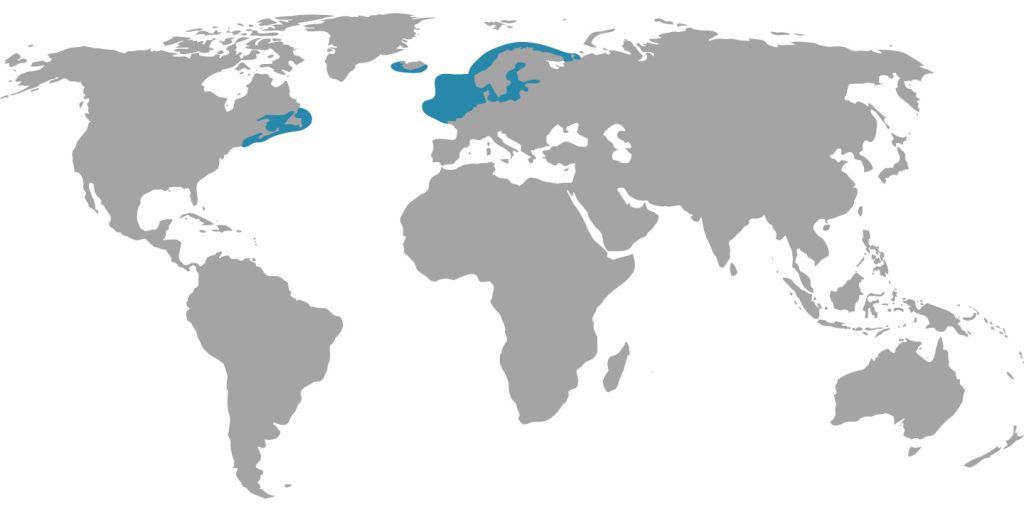
Grey seals are distributed in the northern Atlantic Ocean. They are found throughout the Baltic Sea. In Latvia they are the most commonly encountered seal species.
Seals hunt in the sea and along the coast, sometimes swimming into rivers. Some populations prefer rocky beaches, while others stay on islands or ice.
Adaptations
The grey seal is the largest seal species in the Baltic Sea. Adult male grey seals are over 2 meters long and can exceed 300 kilograms. Females are smaller—about 1.8 meters long and weighing around 150 kilograms. A thick layer of blubber protects seals from the cold, stores nutrients, and helps them swim by maintaining balance.
Males can also be distinguished by their long, curved noses. Because of this, the species got its Latin name, Halichoerus grypus, which means “hook-nosed sea pig.”
Seals are exceptionally well adapted to life in the water. They have long, thick “whiskers” on their snouts, called vibrissae or tactile hairs, which help detect water vibrations. Underwater, grey seals can hold their breath for up to 30 minutes. They shed their fur only once a year, from April to May.
Diet
Seals are carnivores that feed on fish, which is called ichthyophagous animals. They mainly catch herring, sprat, and cod, and less frequently anchovies, flounder, various salmonids, and sand eels. They primarily hunt in the mornings and evenings.
Breeding
Seal pups are born once a year, in early spring. In most cases female gives birth to a single pup covered in thick, yellowish-white fur. Pups are born on the shore or on ice. The mother regularly returns to feed the pup with milk that has a fat content of about 60%. Thanks to this highly nutritious milk, the pup gains weight rapidly and, after about a month, can be left alone to learn how to swim and hunt independently.
Mating occurs almost immediately after the previous pups are born in spring. Pregnancy lasts nearly a year. Seals reach sexual maturity at 4 to 6 years of age, and their lifespan ranges from 30 to 40 years. Only the mothers take care of the pups—males do not participate in raising them.
Conservation and threats
Most significant threats to the species are marine pollution, fishing, human disturbances, and predator attacks (including unattended dogs) in pup nursing areas.
Remember to be careful around the seal pups in the spring and let them remain wild!
Seal pup rehabilitation in Rīga ZOO.


Our supporters and partners


