
South American Coati
Taxonomy
- Phylum: Chordata – chordates
- Class: Mammalia – mammals
- Order: Carnivora – carnivores
- Family: Procyonidae – procyonids
- Species: Nasua nasua – South American coati
Conservation

Distribution and habitat
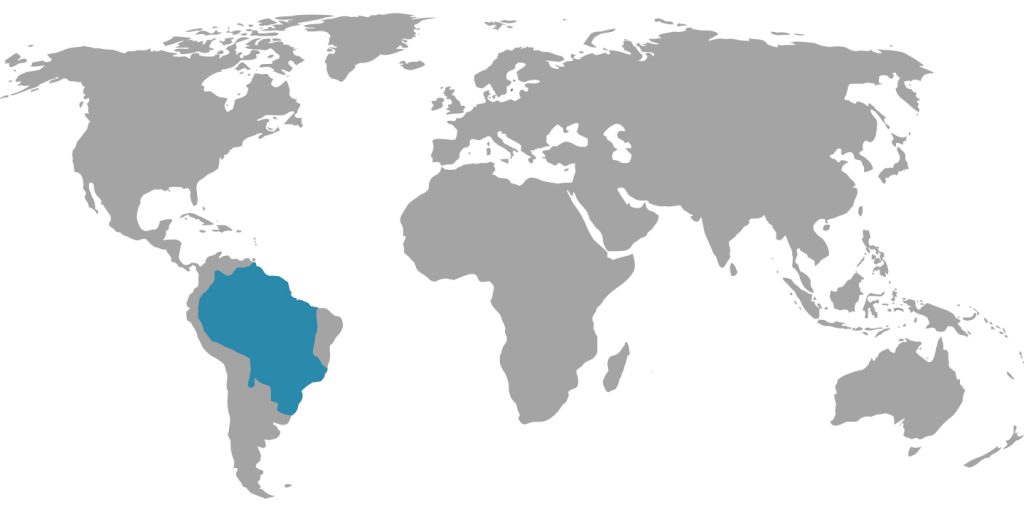
Coatis inhabit the tropical forests of South America, from the foothills up to elevations of 2,500 meters. Coatis inhabit both the forest floor and tree canopies.
Adaptions
South American coatis are medium-sized procyonids (e.g. racoons, kinkajous, ringtails). Their body is about 50 cm long, and their long tail adds another 50 cm. In total, their body length can reach up to 1.3 metres.
They have a sharp, elongated snout with sharp teeth and strong paws with claws for digging in the ground to search for food.
They can rotate their ankles in the opposite direction, allowing them to climb down trees headfirst. Coatis are diurnal.
Diet
Coatis are omnivores and forage for food depending on the season and availability. During the summer, they eat various fruits, while in the winter, when fruits are scarce, they feed on invertebrates such as beetles, ants, grasshoppers, spiders and millipedes. Occasionally, coatis may hunt small birds, rodents, and reptiles.
Breeding
South American coatis have a polygynous mating system, where one male mates with several females. Males may fight each other for access to females.
Females with young live in social groups, while males live alone and only join groups during the mating season, so after mating, males leave the group. After about 70 days, females give birth to 3 to 7 young. Females reach sexual maturity at 2 years old, while males mature at 3 years old.
Conservation and threats
In the European Union, South American coatis are recognized as an invasive species, meaning individuals cannot be imported, bred, or released into the wild within the EU.
In their native range, coatis have a stable population, but human activity may pose a threat, and the population needs to be monitored.


Our supporters and partners


