
Northern Lynx
Taxonomy
- Phylum: Chordata – chordates
- Class: Mammalia – mammals
- Order: Carnivora – carnivores
- Family: Felidae – cats
- Species: Lynx lynx – Eurasian Lynx
- Subspecies: Lynx lynx lynx – Northern Lynx
Conservation


Distribution and habitat
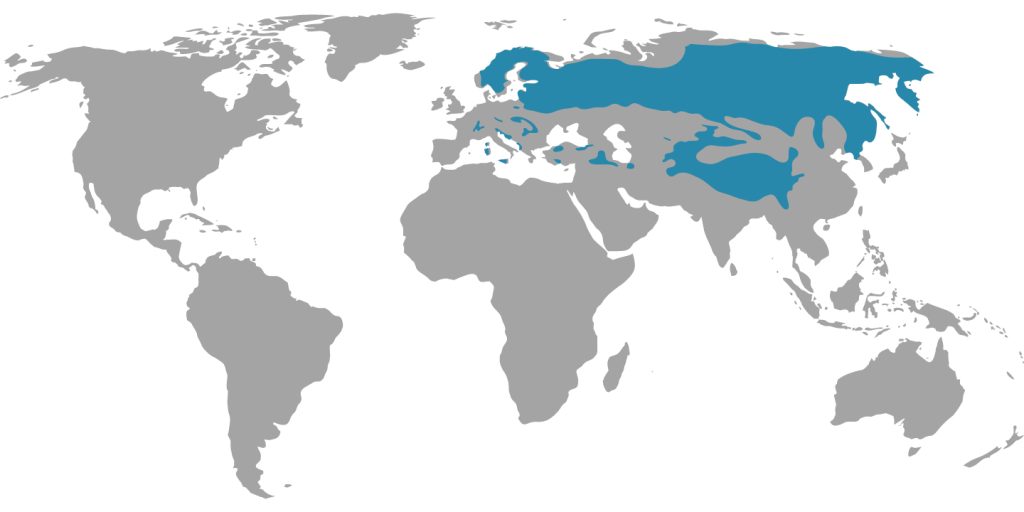
The Eurasian lynx is the most widespread of the four lynx species. They inhabit large coniferous and mixed forests and can also be found in tundra areas. Lynxes mark and defend their territory from other lynxes. Territories are primarily changed due to food depletion or disturbances.
Adaptions
The Eurasian lynx is also the largest of the four lynx species. Males weigh between 18 and 25 kilograms, while females weigh 12 to 16 kilograms. At the shoulder, lynxes are 50 to 75 cm tall.
Lynxes are skilled climbers, but they only climb trees, when necessary, such as when escaping from danger. Their strong and long hind legs, along with sharp claws, help them climb, which they can retract just like a domestic cat. This ability allows their paw prints to be distinguished from those of wolves or dogs in the forest – lynx tracks are rounder and usually don’t show claws.
It is speculated that the black tufts of hair on a lynx’s ears help improve hearing, but they are more likely to serve a communication function between lynxes, highlighting the position of the ears. Unlike many other members of the cat family, lynxes have short tails. There are various explanations for this, but the most popular theory is that a genetic mutation led to a short tail in the lynx’s ancestor, and since it wasn’t a hindrance, the trait remained. It is also possible that the short tail helps retain heat.
Diet
The Eurasian lynx is a predator that prefers various types of ungulates, most commonly roe deer, but it can also hunt larger animals such as red deer when necessary. It also hunts birds, hares, rodents, and other animals. Any leftover prey is dragged away and hidden, so the lynx can return to it if needed.
Hunting typically involves stalking the prey on the ground. The lynx’s excellent vision, hearing, and sense of smell are key to its hunting success.
Breeding
Female lynxes begin to mark their territories at the end of January and in February. Male lynxes, following the scent markings, gather around the females and start engaging in fights. These fights usually do not result in injuries but are marked by loud calls and displays of strength. The lynx mating season lasts until mid-March. For the rest of the year, lynxes live as solitary animals, and females raise their young alone.
Pregnancy lasts about 70 days. A litter typically consists of one to four kittens, with two or three being the most common. The kittens are cared for in a well-hidden den. Around three months of age, the mother begins to teach them how to hunt. The young become fully independent by winter, and the mother leaves them before the next mating season.
Conservation and threats
In Latvia, in 2022, amendments were made to the list of specially protected species, and it was decided to ban lynx hunting. In the 2021-2022 period, the State Forest Service reported that there were approximately 1,400 lynxes in Latvia.


Our supporters and partners


