
Naked Mole-rat
Taxonomy
- Phylum: Chordata – Chordates
- Class: Mammalia – Mammals
- Order: Rodentia – Rodents
- Family: Heterocephalidae – Mole-rats
- Species: Naked mole-rat – Heterocephalus glaber
Conservation

Distribution and habitat
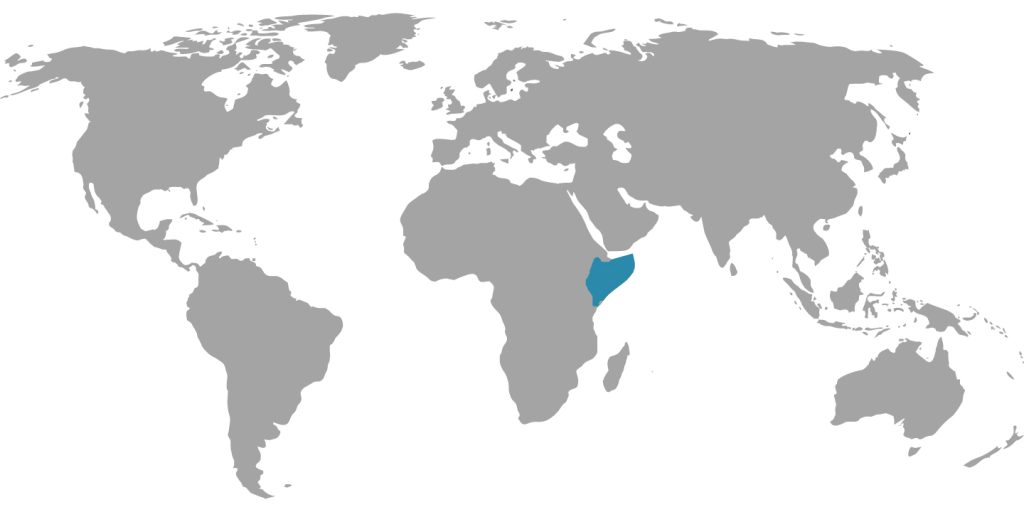
Naked mole-rats are found in eastern Africa – Ethiopia, Somalia and Kenya. They live underground in savannah and grasslands, forming tunnel systems at a depth of two meters. Tunnel systems can be up to 3 km long and have chambers for different functions like nursery, bathroom and food storage.
Adaptions
Naked mole-rats are small rodents. They are on average 10 cm long and weigh around 40 g. Breeding females are larger and heavier. Naked mole-rats are naked – their skin is pink with tiny, sensitive hairs. They have very small, poorly developed eyes that are covered with thick eyelids that protect eyes while digging underground. They primarily use touch and scent while living in the underground. Like typical rodents they have two long incisors, which are used for tunnel digging and eating.
Diet
Naked mole-rats are herbivorous. They feed on plant roots and tubers. Mole-rats store food in special tunnel chambers for later use when fresh food is not available.
Breeding
Naked mole-rats have a special social hierarchy that resembles bees. They live in organized families with one queen (breeding female) and her subjected generations. The queen chooses a couple of oldest and strongest males to breed with, while the rest of the mole-rats are “workers”. Other females in the colony become sterile. Each worker has their own task – looking for food, dig tunnels, protect the tunnels or care for babies. One colony can reach 100 individuals and have their own unique smell of recognition. The queen gives birth to 11-12 babies once a year.
Conservation and threats
The naked mole-rat is not endangered in the wild, but potential threats are expansion of agricultural lands. The wild colonies of the mole-rats are located in protected areas and have also successfully managed captive colonies in zoos.


Our supporters and partners


