
Domestic Yak
Taxonomy
- Phylum: Chordata – chordates
- Class: Mammalia – mammals
- Order: Artiodactyla – even-toed ungulates
- Family: Bovidae – bovids
- Species: Bos grunniens – Domestic Yak
Distribution and habitat
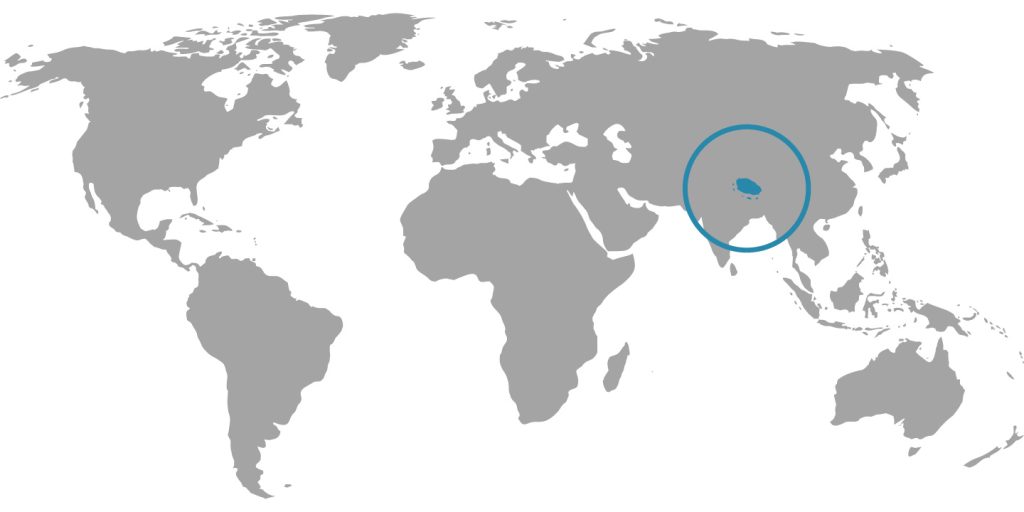
The yak inhabits tundra, steppe, and desert habitats at elevations between 3,200 and 6,100 meters above sea level. Yaks are well adapted to harsh climates – some regions receive as little as 100–300 mm of precipitation annually, most of which falls as hail or snow. Air temperatures can drop below –40ºC.
Vegetation in these areas is sparse, consisting mainly of grasses, sedges, and low shrubs. Some herds of wild yaks migrate over long distances to reach feeding grounds.
Adaptations
Yaks are large animals with a massive build. They can grow up to 3 meters in length and over 2 meters in height, with the shoulder height around 1.4 meters. Wild male yaks can weigh up to 1,000 kilograms, while females are significantly smaller, averaging around 400 kilograms.
Domestic yaks are typically smaller, usually weighing between 250 and 500 kilograms. Both males and females have dark, curved horns.
Yaks have several physiological adaptations that enable them to survive in high-altitude, cold environments – larger lung capacity, a bigger heart, increased red blood cell count, and higher hemoglobin concentration. Their long, shaggy coat, which nearly touches the ground, provides excellent insulation, making it ideal for mountain habitats. This is enhanced by a dense undercoat. Additionally, their sweat glands secrete a sticky substance that binds the undercoat fibers together, further improving heat retention.
Diet
Yaks are herbivores and primarily feed on low-growing grasses and other available vegetation, including shrubs, herbaceous plants, lichens, and mosses. To obtain water, they often chew ice or snow, but they are also capable of surviving for several days without water. During winter, yaks may lose up to 20% of their body weight.
Breeding
Females live in small herds with their young. Males live either alone or in small bachelor groups but join the female herds during the mating season, which occurs from September to October. During this time, males fight aggressively for access to females. Each female typically gives birth to a single calf, which reaches full maturity by the age of six.
Conservation and threats
The natural range of yaks has significantly decreased, and they are threatened by illegal hunting.


Our supporters and partners


