
American Flamingo
Taxonomy
■ Phylum: Chordata – chordates
■ Class: Aves – birds
■ Order: Phoenicopteriformes – flamingos
■ Family: Phoenicopteridae – flamingos
■ Species: Phoenicopterus ruber – American Flamingo
Conservation


Distribution and habitat
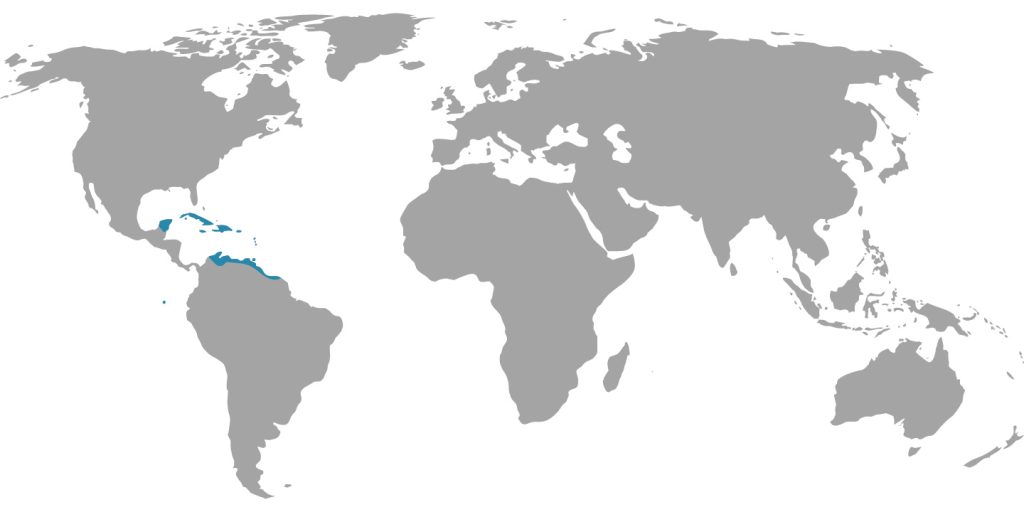
The species lives in the Caribbean, Central America, northern South America and the Galapagos Islands.
Their preferred habitats are saline lagoons, mudflats, and shallow, brackish coastal or inland lakes.
Adaptions
The American flamingo is a wading bird, standing between 120 and 145 cm tall. Males typically weigh around 2.8 kg, while females weigh about 2.2 kg. Their wingspan ranges from 140 to 165 cm.
Most of their feathers are pink, which is why they were once called “pink flamingos.” This pink color helps distinguish them from the paler greater flamingo, which can also be found at Rīga ZOO.
Diet
The American flamingo’s diet includes small crustaceans, mollusks, worms, nematodes, insects, widgeon grass, seeds, algae, diatoms, and decaying leaves. Many of these foods are rich in carotenoids, a pigment that gives flamingos their vibrant color.
Flamingos feed by filtering water through lamellae, hairy structures along the edges of their beaks.
Breeding
The American flamingo lays a single chalky white egg on a mud mound nest between May and August. The incubation period lasts 28 to 32 days, with both parents sharing the responsibility of hatching the egg.
Flamingos reach sexual maturity between 3 and 6 years of age, but they typically don’t breed until they are around 6 years old.
With a life expectancy of 40 to 60 years, flamingos have one of the longest lifespans of any bird. The American flamingo at Rīga ZOO is one of the oldest animals at the zoo!
Conservation and threats
Although the populations of the American flamingo are stable and not currently threatened, several factors pose risks to the species. These include habitat loss due to human expansion, pollution, wetland fragmentation, and the effects of climate change.


Our supporters and partners


