
European Mink
Taxonomy
- Phylum: Chordata – chordates
- Class: Mammalia – mammals
- Order: Carnivora – carnivores
- Family: Mustelidae – mustelids
- Species: Mustela lutreola – European mink
Conservation


Distribution and habitat
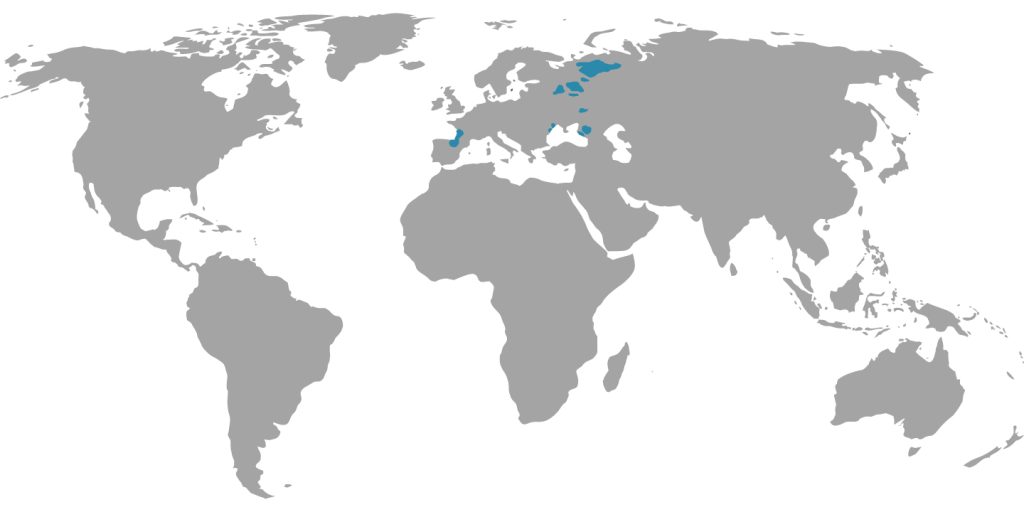
European mink used to be a widely distributed species in most of Europe. Now their distribution has been reduced by almost 90% and European mink is found in only a few countries – Romania, Ukraine and Russia. Successful conservation efforts have led to the reintroduction of the species in a small area of Estonia. Isolated populations are found also in North of Spain and France.
European mink inhabits various wetlands – riverbanks, flooded forests, swamps and wet grasslands. They prefer habitats with thick vegetation.
Adaptions
Males and females are hard to tell apart, but males are slightly larger. Males weigh around 850 grams and are around 40 centimetre long, females weigh around 500 grams and are up to 35 centimetres long.
Mink has short legs and webbed feet. Together with water resistant coat and small ears mink are excellent swimmers.
In Latvia European mink can be distinguished from similar animals by evenly brown fur, small ears and white spots on upper and lower lip – no other markings are present. Invasive American mink (Neovison vison) has the white spot, but only on the lower lip.
Diet
Minks are carnivores. They are not too picky and hunt various amphibians, small mammals, fish, crustaceans and birds. Elongated and wide head with strong jaws is suited for catching prey both on land and in the water.
Minks are territorial and protect their space from other minks. In the winter when there is less food mink have larger territories than in the summer.
Breeding
Males and females meet only in the breeding season from January to March. Males can travel up to 70 kilometres to find females.
Pregnancy lasts 39 to 44 days. European minks have one litter per year, usually in April or June. Each litter has two to five babies or kits. Kits are born blind, but they develop very fast and start to eat solid food after 20 to 25 days. Around 2 months of age kits start to join their mother to hunt. Female takes care of her young for about 10 weeks.
Kits reach sexual maturity the following year. The average lifespan of the European mink in the wild is usually up to 4 years, but in captivity it can reach as much as 10 years.
Conservation and threats
European minks are signifficantly affected by the destrucion of wetlands. Historically hunting for fur has had a significant influence on mink numbers, today most furs come from American mink in fur farms.
American mink that escaped fur farms have become a dangerous invasive species in many countries. That is one of the main reasons for the extinction of the European mink in much of its historical distribution as well as a threat to many bird and mammal species.


Our supporters and partners


