
European Forest Reindeer
Taxonomy
■ Phylum: Chordata – chordates
■ Class: Mammalia – mammals
■ Order: Artiodactyla – even-toed ungulates
■ Family: Cervidae – deer
■ Species: Rangifer tarandus – Reindeer
■ Subspecies: Rangifer tarandus fennicus – European Forest Reindeer, or Finnish Forest Reindeer
Conservation


Distribution and habitat
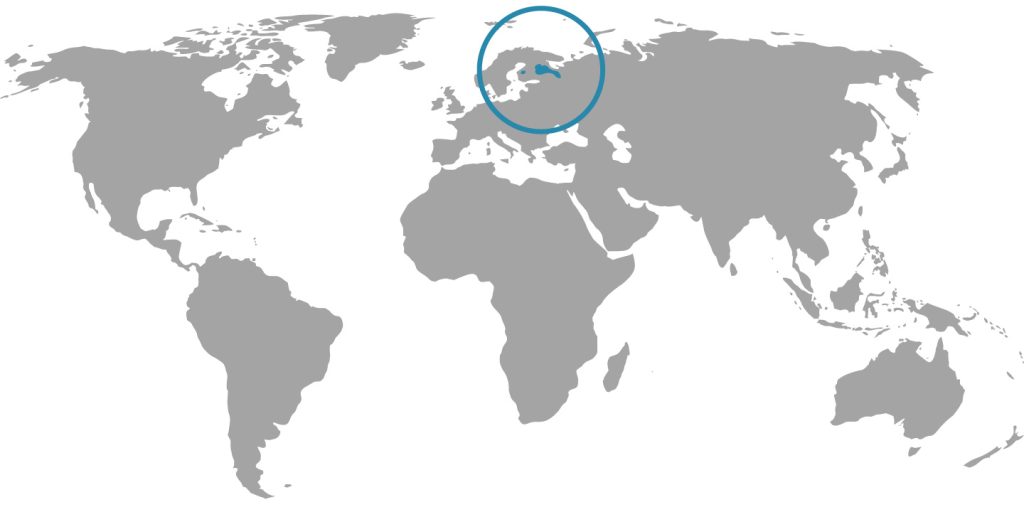
The European forest reindeer is a rare subspecies of reindeer found in the wild in Finland and eastern Russia, particularly in Karelia. They live in boreal forests and migrate seasonally between summer and winter habitats, covering long distances in spring and autumn.
Adaptations
The reindeer stands about 1.4 meters tall at the shoulder. Males weigh between 150 and 250 kilograms, while females weigh around 100 kilograms. Reindeer are the only deer species in which both males and females grow antlers.
Male reindeer have the second largest antlers among modern deer species. Their antlers can grow up to 1 meter wide and 135 cm long, with a complex branching structure. Female antlers are much smaller and simpler. Older males shed their antlers shortly after the mating season, while females keep theirs until spring. In winter, reindeer grow a thick, insulating coat to protect them from the cold.
As reindeer walk, they make a clicking sound caused by tendons rubbing against bones in the feet. While there is no scientific proof, it is believed that this sound may help the herd stay together in poor visibility caused by fog, snow, or darkness.
Reindeer have large, flat hooves that act like snowshoes in winter. Hair between the four toes on each foot keeps snow from clogging them. Reindeer can run at speeds of up to 80 km/h. They are also strong swimmers, usually swimming at 6.5 km/h but reaching speeds of up to 10 km/h when needed.
Diet
Reindeer have a more varied diet in summer, feeding on willow and birch leaves and shoots, mushrooms, grasses, sedges, and various other plants. An important part of their diet is lichen—especially Cladonia species—which becomes a key food source in winter.
One of their adaptations to Arctic life is the ability to smell and find lichen and other food under the snow.
Breeding
Reindeer move in large herds. The mating season takes place in October. During this time, males fight with each other, which often results in injuries and exhaustion. Dominant males gather groups of 5 to 15 females. They stop feeding during this period and lose a significant amount of body fat.
Pregnancy lasts 7 to 8 months. In May or June, a female usually gives birth to one calf, and rarely to two. At birth, reindeer calves weigh around 5 to 9 kilograms. Unlike the calves of other deer species, they are not spotted but have reddish fur. Just one day after birth, a reindeer calf is already fast enough to outrun a human. Calves feed on their mother’s milk for at least a month and often continue nursing for several months, sometimes until winter.
Young reindeer reach sexual maturity between 1.5 and 3.5 years of age.
Conservation and Threats
European forest reindeer are threatened by the loss of their natural habitat and human disturbance. Zoos play a crucial role in conservation and reintroduction efforts by providing animals for breeding programs. Maintaining the genetic diversity of reindeer living in zoos is essential for the success of future reintroduction projects.
Despite ongoing conservation efforts, challenges such as the disappearance of natural habitats remain, making continuous conservation actions necessary.
Refrences:
https://animalia.bio/finnish-forest-reindeer?property=73
Panchenko, D., Paasivaara, A., Hyvärinen, M., Krasovskij, Y. (2021). The wild forest reindeer, Rangifer tarandus fennicus, in the Metsola Biosphere Reserve, Northwest Russia. Nature Conservation Research. 6. 10.24189/ncr.2021.026.
Blomqvist, L. (2015) EAZA Husbandry Guidelines for Eurasian Forest Reindeer: Rangifer tarandus fennicus, Lönnberg 1909 and the 2014 European Studbook (ESB). Nordens Ark Foundation


Our supporters and partners


