
Andean Condor
Taxonomy
■ Phylum: Chordata – chordates
■ Class: Aves – birds
■ Order: Cathartiformes – New World vultures
■ Family: Cathartidae – New World vultures
■ Species: Vultur gryphus – Andean Condor
Conservation


Distribution and habitat
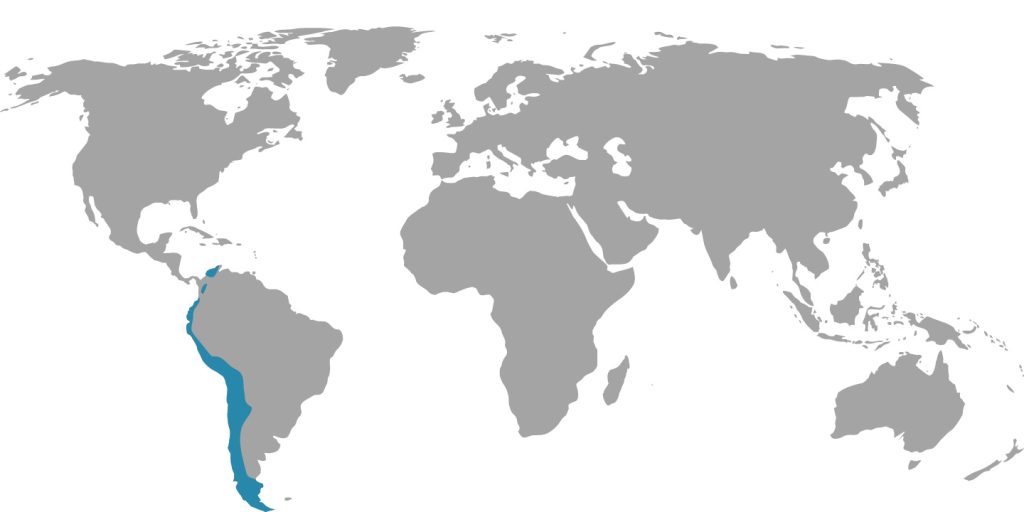
Andean condor is found in the Andes region of South America. This species is found in various habitats, including shrublands, grasslands, and even deserts. Its range extends from sea level up to 5,000 meters in the peaks of the Andes.
Nests are built on cliff edges.
Adaptions
The Andean condor is one of the largest birds of prey in the world. Adult males can weigh up to 15 kilograms, with an average weight of around 13 kilograms, but females weight an average about 10.5 kilograms. The wingspan of an Andean condor can reach up to 3 meters.
Andean condors are among the few vulture species that exhibit sexual dimorphism (physical differences between females and males) — only males have a distinctive crest on their heads.
The Andean condor is a social species with a pronounced social structure, dominated by the largest adult males. They gather in communal roosts, which may host more than 80 birds. Colonies have separate winter roosts (in sunny areas) and summer roosts (in shaded areas).
Diet
Andean condors are scavengers — they feed on dead animals that they have not hunted themselves. The lack of feathers on their heads and necks helps them stay clean while tearing into decaying meat.
In Argentine Patagonia more than 80% of the Andean condor population’s diet consists of invasive (non-native and harmful) animal species such as wild boars, European deer, and European hares. By feeding on these and other carcasses, the Andean condor helps keep the environment clean and reduces the risk of disease spread, some of which can also be dangerous to humans.
Breeding
Andean condors reach sexual maturity at around 8 years of age. There is no strong seasonality in their native range, so they can breed over a wide period from April to October. At the beginning of the mating season, the male displays his neck to the female, which takes on a yellowish hue during this time.
Usually, a single egg is laid, which is incubated for 54–58 days. Andean condors are monogamous — they form lifelong pairs, and both parents incubate the egg and care for the chick.
Condor chicks leave the nest for the first time at around six months old. They become fully independent at about 15 months of age. Adult plumage develops only at around 6 or 7 years old; until then, young condors are brownish-grey.
Conservation and threats
The main threats are habitat loss and poaching. The species is at risk of lead poisoning because it feeds on animals that have been shot by hunters but not retrieved.
There have also been documented cases of mass killings of Andean condors using poison-laced bait. Poisoning scavengers is a practice observed globally, as local people often assume that the birds have killed the animals they are feeding on.
Researchers from Riga Zoo have studied Andean condor poisoning.


Our supporters and partners


